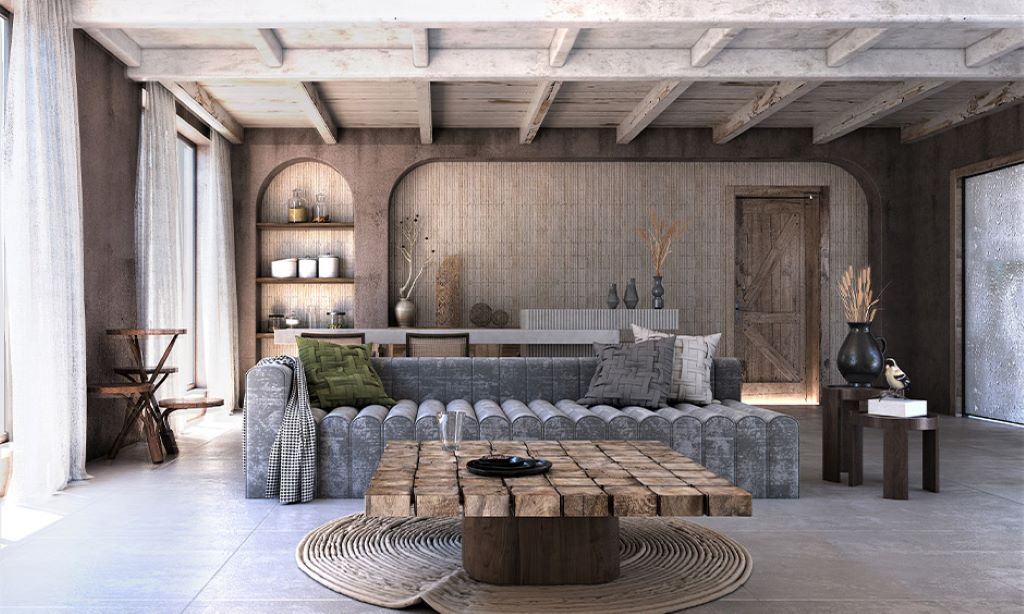
Rustic Scandinavian Interior design, renowned for its clean lines, functionality, and embrace of natural light, has captivated homeowners worldwide. While the traditional style often leans towards minimalism, a captivating trend has emerged: the fusion of rustic elements, introducing a depth and warmth that complements the Scandinavian aesthetic beautifully. At the heart of this fusion lies the artful mixing of textures, a technique that breathes life and character into living spaces.
The Allure of Texture
Texture, in the realm of interior design, refers to the tactile quality of a surface or material. It can be rough, smooth, soft, hard, or anything in between. In rustic Scandinavian interior, texture plays a pivotal role in creating visual interest, adding dimension, and evoking a sense of coziness. By combining various textures, you can transform a space from starkly simple to invitingly complex.
The Rustic Scandinavian Interior Design Palette
The rustic Scandinavian design draws inspiration from nature’s raw beauty and the simplicity of traditional Nordic living. This style celebrates natural materials like wood, stone, leather, and wool, each possessing unique textures that can be skillfully combined to achieve a harmonious balance.
- Wood: A staple in both rustic and Scandinavian design, wood provides warmth and a connection to nature. Reclaimed wood, with its weathered patina and knots, adds a touch of history and authenticity. Consider incorporating exposed beams, wide-plank flooring, or live-edge furniture for a rustic touch.
- Stone: Stone brings an earthy, grounded element to the space. Whether used for fireplaces, accent walls, or decorative objects, its cool touch contrasts beautifully with warmer textures like wood and wool. Opt for natural stone with variations in color and texture for a more organic feel.
- Leather: Leather adds a luxurious, tactile element that exudes sophistication. It can be used for upholstery, throw pillows, or even decorative accents like a leather-bound book or a vintage suitcase. Choose leather in rich, warm tones like brown, tan, or cognac to complement the natural palette of rustic Scandinavian design.
- Wool: Wool is synonymous with warmth and comfort. Its soft, fuzzy texture invites you to curl up with a good book or a cup of hot cocoa. Incorporate wool through rugs, throws, cushions, or even wall hangings for a cozy touch.
Rustic Scandinavian Interior: Creating Harmony Through Contrast

The key to successfully mixing textures in rustic Scandinavian design is to strike a balance between contrast and cohesion. Pair rough textures with smooth ones, soft with hard, and matte with shiny. For example, a sleek leather sofa can be juxtaposed with a chunky knit throw blanket, or a rustic wooden table can be adorned with smooth ceramic tableware.
From Bland to Grand: Transforming Your Home Into a Personal Oasis
Tips for Mixing Textures
- Start with a neutral base: Opt for a neutral color palette for your walls, floors, and large furniture pieces. This creates a clean canvas for your textured elements to shine.
- Vary the scale: Use a mix of small, medium, and large textures to add visual interest. A large, textured rug can be paired with smaller, textured throw pillows, for instance.
- Layer textures: Don’t be afraid to layer different textures on top of each other. This creates depth and complexity. For example, layer a sheepskin rug over a woven jute rug, or drape a linen throw blanket over a leather armchair.
- Consider the function: Choose textures that are not only visually appealing but also functional. For example, a wool rug is soft underfoot, while a leather chair is durable and easy to clean.
- Don’t overdo it: While mixing textures is encouraged, avoid going overboard. Too many competing textures can create a chaotic and overwhelming space.
Related: From Drab to Fab: Budget-Friendly DIY Home Improvement Projects
Texture as an Expression of Personality
Ultimately, mixing textures in rustic Scandinavian interior design is a personal journey. There are no hard and fast rules, only guidelines to help you create a space that reflects your unique taste and style. By experimenting with different textures and combinations, you can create a home that is both visually stunning and deeply comforting.