Finding a gymnastics rope that can withstand Colorado’s unique climate—from intense sun and dry air to sudden temperature swings—isn’t as simple as picking the first option online. Whether you are setting up a backyard training rig, outfitting a school gym, or building a professional facility, durability depends on materials, construction, and how well the rope suits your specific environment. Many buyers discover too late that a rope that works in a humid coastal state may crack, fray, or lose its grip in Colorado’s high altitude. This guide will walk you through the exact factors that determine longevity, the materials that truly last, and where to find a durable gymnastics rope colorado athletes and coaches rely on.
Key Takeaways
- Colorado’s dry climate and intense UV exposure cause many rope materials to break down faster; choose UV-resistant polymers or treated natural fibers.
- Look for a rope with a braided outer layer over a solid core—this combination resists abrasion better than single-layer ropes.
- The mounting hardware (clamps, carabiners, swivels) is often the weak point; invest in galvanized or stainless steel components.
- Proper installation and regular maintenance are more critical to longevity than the rope’s price tag.
- Test for grip, flexibility, and splintering before purchasing; a durable rope should have no rough spots and should bend without cracking.
Why Colorado’s Climate Destroys Inferior Gymnastics Ropes
Colorado presents a specific set of challenges that quickly expose poor-quality gymnastics ropes. The average elevation of 6,800 feet means much lower humidity (often below 30%), which dries out natural fibers like manila and sisal. Over time, this dryness causes the fibers to become brittle, leading to cracking and splintering that is both dangerous and unsightly. Additionally, the state receives over 300 days of sunshine annually, and the UV rays from that sunshine degrade the polymers in synthetic ropes—especially polypropylene that lacks UV stabilizers. When a rope is used outdoors or in a bright, high-ceiling gymnasium, the degradation accelerates dramatically. You might notice the rope turning a chalky white, developing surface fuzz, or becoming stiff. These are early signs that the material is losing its structural integrity. A rope that remains flexible after months of exposure is a strong indicator of quality manufacturing and appropriate material selection for this region.
Essential Materials: What Makes a Rope Truly Durable?
Not all ropes are created equal. In the gymnastics world, you mainly choose between natural fiber and synthetic materials. Each has a distinct lifespan and performance characteristic in dry, sunny environments, To keep your training facility and equipment in top shape year-round, review our guide on the ultimate checklist for seasonal property maintenance.
Natural Fibers: Authenticity vs. Practicality
Traditional gymnastics ropes are often made of manila or hemp. These offer a classic feel and a natural grip that many athletes prefer. However, in Colorado’s arid zone, a manila rope will typically last only 1–2 years with moderate use before it becomes dry, rough, and prone to breaking. The fibers lose their natural oils, leading to shrinkage and stiffness. If you choose a natural fiber rope, you must be prepared to condition it regularly with a rope dressing or light oil. Even then, you will likely replace it more frequently than a synthetic option. For indoor facilities with controlled humidity, a natural rope is viable. For outdoor use, it is generally a poor investment.
Synthetic Polymers: The Modern Standard
For facilities that want minimal maintenance and maximum longevity, synthetic ropes are the clear winner. Look specifically for ropes made of heat-set nylon or a nylon-polyester blend. These materials resist UV degradation better than polypropylene. The best synthetic gymnastics ropes have a braided outer sheath and a twisted or braided core. This construction gives the rope weight and stability while preventing the outer layer from slipping. A high-quality synthetic rope will not absorb moisture, meaning it won’t freeze in winter, swell in humidity, or support the growth of mold and mildew. In Colorado’s freeze-thaw cycles, this is a significant advantage over natural fibers, which can become brittle and snap when frozen after absorbing moisture.
Construction Factors That Separate a 2-Year Rope from a 10-Year Rope
Braided vs. Twisted
The construction method directly impacts durability. A braided rope (where fibers are woven in a basket pattern) is generally more flexible and resists kinking. However, a braid can snag on rough surfaces. A twisted rope is more compact and tougher on the outside but tends to unravel at the ends if not properly whipped. For gymnastic use, a specialized braided rope with a tight weave is often the best compromise, providing grip without excessive surface roughness.
Core and Sheath Integrity
A solid core is essential. A rope that is just a hollow braid will flatten over time and lose its impact absorption. Look for a rope with a resilient core that maintains its round shape. Press the rope between your fingers; it should spring back immediately without showing dents. The core also provides the weight needed for a controlled swing and descent.
Assessing Local Suppliers and Custom Needs
When buying locally in Colorado, you have the advantage of inspecting the rope before purchase. Here is a checklist of what to look for during inspection:
- Flexibility Test: Bend the rope into a tight U-shape. If you see cracks forming on the exterior or hear a crunching sound, the material is already too dry or brittle.
- Surface Smoothness: Run a uncovered hand up and down the rope. Any slivers, pilling, or rough patches are red flags.
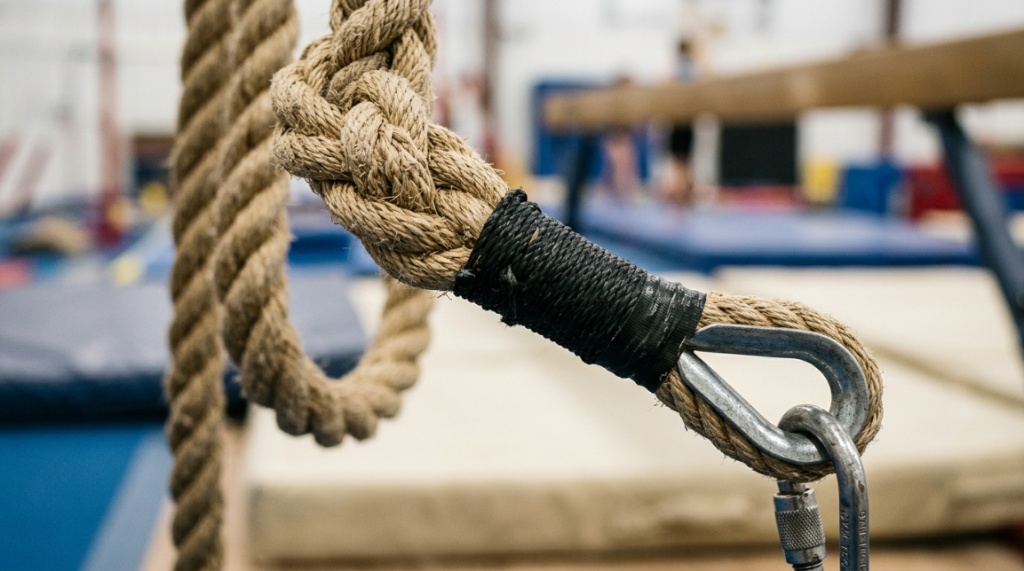
- Splice Quality: Examine the ends. A durable rope will have a clean, tight splice (a seamless join) or a professionally whipped end. Loose ends or visible glue indicate poor workmanship.
- UV Protection: Ask the supplier specifically if the synthetic rope contains UV inhibitors. If they don’t know, that’s a warning sign.
| Material | UV Resistance | Dry Climate Performance | Expected Lifespan (Indoor) | Expected Lifespan (Outdoor CO) |
|---|---|---|---|---|
| Manila (Natural) | Poor | Poor (Becomes Brittle) | 12-18 months | 3-6 months |
| Hemp (Natural) | Moderate | Average | 2-3 years | 12 months |
| Polypropylene | Low | Good (Loses strength quickly) | 3-4 years | 6-12 months |
| Nylon / Polyester Blend | High | Excellent | 8+ years | 2-4 years |
Hardware and Installation: The Overlooked Weak Points
Often, the rope itself outlasts the hardware holding it up. A standard eye-bolt screwed into a beam might seem secure, but constant swinging creates leverage that can strip the screw or bend the hook. In Colorado, where the air is dry, wood framing can shrink, loosening the hardware over the first few months of use. Therefore, you must choose mounting hardware as carefully as the rope. Use a heavy-duty swivel rated for at least 3,000 lbs to prevent the rope from twisting and fraying. Use a carabiner or quick-link made of stainless steel, not plated zinc, as the plating will wear off and rust in the variable mountain humidity and sweat from hands. The rope should be tied with a specific knot (like the grapevine or figure-eight) that does not cinch too tight and damage the fibers. Alternatively, a rope clamp with a smooth clamping surface will protect the rope’s exterior.
Where to Buy and What to Avoid
Finding a truly durable rope in Colorado involves knowing which retailers prioritize longevity over cost. You have three primary options:
Specialty Gymnastics Shops
These are your best resource for high-quality, professional-grade ropes. They can advise on the exact specifications needed for your ceiling height and athlete weight. The downside is limited stock and higher prices.
Large Big-Box Sporting Goods Stores
These stores sell general-purpose ropes that may be labeled as “climbing” or “gymnastic” but are often too stretchy or not UV stabilized. They rarely have specialists on staff who can answer detailed questions about material degradation. You will need to be an informed buyer.
Online Retailers
Online, you have access to the largest variety and often better prices. However, you cannot physically inspect the rope. Look for sellers who provide detailed specifications, a high-resolution photo of the rope’s end splice, and clear return policies. A seller that hesitates to answer material questions should be avoided.
The key is to read the fine print. Many ropes sold online are imported and do not meet US safety standards. Look for a rope that carries a certification tag or is specifically marketed as “school-grade” or “competition-grade”. These terms indicate a higher number of fibers per inch and tighter construction. A cheap rope that saves you $50 today might cost you $150 in replacement costs within a year—not to mention the downtime for your training schedule.
Maintenance: Prolonging the Life of Your Rope
Even the best rope will fail prematurely without proper care. In Colorado, the primary enemies are dust and dry air. Here is a practical maintenance routine:
- Weekly Wipe-Down: Use a damp (not wet) cloth with mild soap to remove chalk, dust, and hand oils. These residues attract grit that acts like sandpaper, wearing down the fibers.
- Dry Thoroughly: After wiping, let the rope hang fully extended to dry. Never store it coiled while damp, as this can cause mildew in synthetic ropes or rot in natural ones.
- Inspect for Frays: Run your hand along the rope every month. If you feel a rough patch, use a lighter to gently melt the protruding fiber on synthetic ropes to re-seal the weave. For natural ropes, trim the fray with sharp scissors.
- Loosen the Knots: If your rope is tied to the ceiling, retie the top knot once every six months. This changes the pressure points and prevents permanent crimping of the fibers.
Weighing the Price vs. Value Equation
Predicting the right budget is tricky. A basic 1.5-inch manila rope costs around $40. A high-end synthetic competition rope with a 2000-lb breaking strength will cost between $150 and $250. For indoor use, a moderately priced nylon rope in the $80-$120 range often represents the best value. It provides excellent grip without the premium cost of competition-only ropes. For outdoor use, you cannot afford to buy a low-cost rope. You must invest in the premium UV-resistant material, or you will be replacing it every season. Calculate the cost per year of use. If a $100 rope lasts 4 years, that’s $25 per year. A $40 rope that lasts 6 months costs $80 per year. The math is clear: buying durable is more economical for those who train consistently.
Frequently Asked Questions
What length of gymnastics rope should I buy for a 10-foot ceiling?
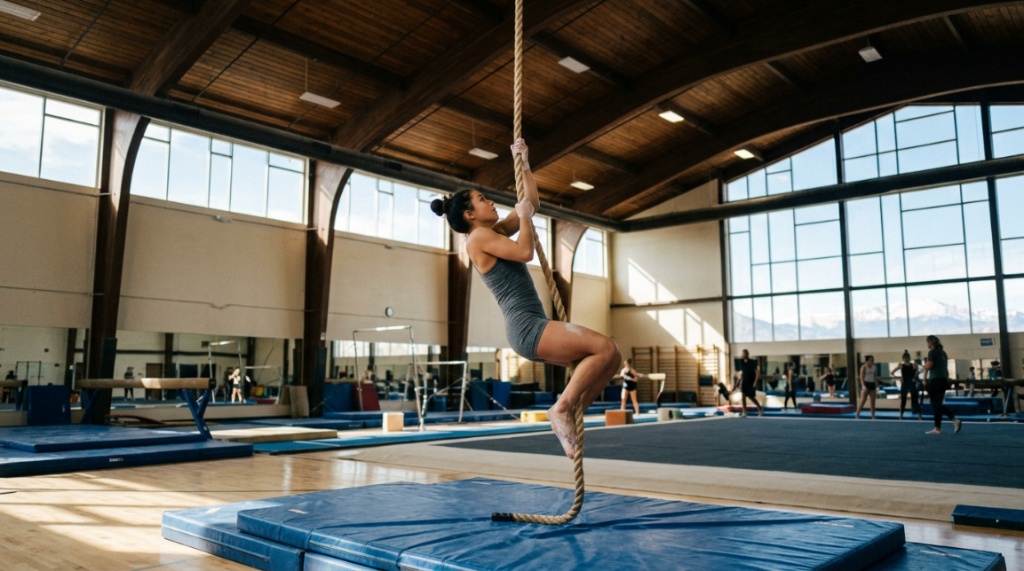
For a 10-foot ceiling, purchase a rope that is at least 16 feet long. This allows for necessary knots on both ends and ensures the rope hangs low enough for the athlete to grip comfortably without touching the floor excessively. Since you lose about 2 feet to knots and hardware, a 16-foot rope leaves a 14-foot hanging segment, which is standard for most athletes.
Can I leave a gymnastics rope outside in Colorado all year?
Even with a UV-resistant synthetic rope, constant exposure to snow, rain, and sun will shorten its life. If you must leave it outside, detach it and store it in a dry shed or garage during the winter months. A rope left out year-round will accumulate ice crystals that micro-tear the outer fibers.
How do I know if a rope is too stiff or too stretchy?
A proper gymnastics rope should have very low elasticity (stretch). When you pull on the bottom end, it should not extend more than 1-2 inches from a 15-foot length. If it stretches more, it will give a “bungee” effect that reduces control. For stiffness, the rope should easily wrap around a 6-inch diameter pole without cracking, indicating pliability.
Is a thicker rope always more durable?
No. A thick rope (1.5 inches diameter) can feel bulky and be harder for smaller hands to grip. Durability comes from fiber quality and tightness of weave, not just thickness. A 1.25-inch high-density rope can outlast a 1.5-inch loose-weave rope because the tight weave prevents abrasion and water infiltration.
Should I buy a rope with a loop at the end or a plain tail?
For climbing, a plain tail is preferred because it allows the athlete to grab at any point. A loop at the end gives a fixed grip but can be restrictive. If the rope has a fused or whipped end rather than a loop, it is usually more versatile and has less risk of the loop breaking at the splice.
Conclusion
Securing a durable gymnastics rope in Colorado requires looking beyond the initial price tag. You are purchasing a safety component that will face intense sunshine, dry air, and heavy use. By selecting a UV-resistant synthetic material, inspecting the construction quality, and investing in robust hardware, you can ensure years of reliable performance. Avoid natural fibers for outdoor setups, and always prioritize a tight braid and solid core. Remember that maintenance is a small weekly effort that pays back multiple times over in extended lifespan. When in doubt, consult a professional supplier who understands local conditions. Ultimately, the best investment is not the cheapest or the most expensive rope, but the one that meets your specific training demands and environmental challenges. Choose wisely, inspect regularly, and your rope will support you through decades of training sessions.