If you live in Texas, you know that keeping up with hedges, shrubs, and bushes is not just a weekend chore—it’s a battle against the elements. The intense sun, unpredictable droughts, and fast-growing varieties like yaupon holly and ligustrum can turn a simple trimming session into a grueling test of endurance. You need a tool that keeps up with the heat without tangling you in extension cords or leaving you stranded with a dead battery halfway down the property line. Finding the best cordless hedge trimmer texas homeowners rely on comes down to matching the machine to the unique demands of the Lone Star landscape. This guide breaks down the specific features that matter most in this climate, the trade-offs you need to consider, and actionable advice to help you make the right call.
Key Takeaways
- Texas heat and dense foliage require a trimmer with a brushless motor and a battery capacity that can handle thick, woody growth without overheating.
- Blade length and tooth gap are critical; longer blades suit large properties, while wider tooth gaps are essential for cutting Texas-native thick-stemmed shrubs.
- Weight and balance matter more than you think when trimming for extended periods in high temperatures, making ergonomic design a priority.
- Look beyond the bare tool price; consider the cost and availability of replacement batteries and chargers, as runtime is a common pain point.
Why Texas Puts a Unique Strain on Hedge Trimmers
Texas isn’t a single climate zone. A tool that works well in the humid piney woods of East Texas might struggle with the arid heat of the West. Regardless of your specific region, there are three common factors that stress cordless equipment: high ambient temperatures, abrasive dust, and heavy, fast-growing vegetation,Selecting the best cordless hedge trimmer texas has to offer isn’t about finding the most expensive tool on the shelf—it’s about matching the machine to the brutal environment it will operate in.
Heat directly impacts battery chemistry. When lithium-ion cells get hot, they can throttle power output to prevent damage. This means a trimmer that runs for 50 minutes in mild coastal weather might only run for 30 minutes in an Austin summer. Additionally, foliage like the Texas Sage or Cenizo has stiff, brittle branches that can stop a weak motor instantly. You need a tool that delivers consistent torque, not just top speed.
Prioritizing Battery and Motor Technology
When narrowing down the options for the best cordless hedge trimmer in Texas, the power source is your first decision point. The debate between brushed and brushless motors isn’t just hype—it’s a fundamental difference in efficiency and longevity.
The Brushless Advantage
Brushless motors generate less friction, produce less heat, and are significantly more efficient. In the Texas heat, a brushless motor is almost a necessity. It disperses heat better and delivers power more consistently than a brushed motor, which can drop off quickly as it warms up. Furthermore, brushless motors often come with better electronic controllers that automatically adjust torque when the blade hits a thick branch, preventing the tool from stalling.
Voltage and Amp-Hours Explained
You’ll see ratings like 20V, 40V, or 60V. For light maintenance on small boxwoods, a 20V system is fine. However, for the heavy growth common around Texas foundations and fence lines, a 40V or higher system provides the necessary cutting force. Pay close attention to the Amp-Hour (Ah) rating on the battery. A 2.5Ah battery is standard, but a 4.0Ah or 5.0Ah battery will give you substantially more runtime. Be aware that higher Ah batteries are heavier and can make the trimmer feel front-heavy, which is a trade-off between endurance and fatigue.
Blade Length and Tooth Configuration
The blade is the part that actually does the work, yet it is often overlooked in favor of battery specs. There are two primary factors to consider here: the cutting length (typically 20 to 26 inches) and the tooth gap.
Choosing the Right Cutting Length
A longer blade (24″ or more) allows you to maintain a flat, level surface across a long hedge with fewer passes. This is vital for formal hedges that require a straight line. If you have a lot of tall, long hedges, a longer blade will save you time. If you have smaller, decorative shrubs or need to do detail work, a shorter blade (18″–20″) is easier to maneuver and less likely to cause accidental over-cutting.
Tooth Gap for Woody Growth
This is where many homeowners make a mistake. If you have evergreen shrubs with thick, mature stems (like Red Tip Photinia or Privet), you need a trimmer with a wider tooth gap. A gap of 3/4 inch or more is essential for grabbing and cutting these stems cleanly. A narrow gap will clog, jam, and tear the branches, leaving a ragged edge that turns brown and looks terrible for months. If your landscaping involves softer, leafy plants, a narrower gap provides a cleaner, more precise finish, To prepare your landscape beds alongside your trimming work, check out our guide on the Best Transplanter for Texas Soil.
Ergonomics and Weight: Surviving the Heat
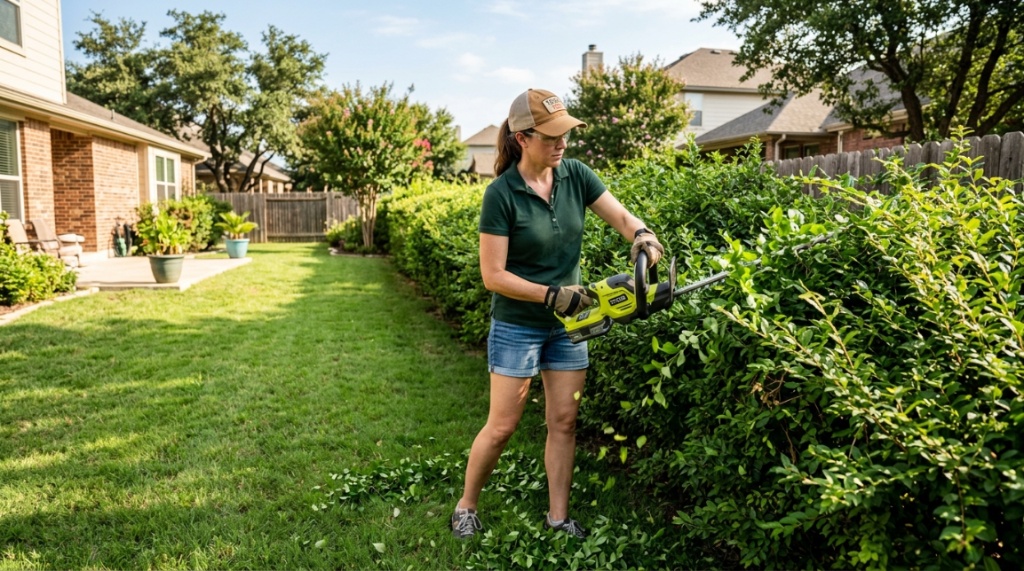
Trimming hedges in Texas is a physical activity. With temperatures often exceeding 95°F, fatigue sets in fast. A heavy trimmer becomes a burden, making the job more difficult and increasing the risk of an accident. You must balance power with maneuverability.
Front and Rear Handle Design
Look for a trimmer with a comfortable rear handle and a rotatable front handle. A rotating rear handle is a game-changer. It allows you to trim vertically without twisting your wrist into an unnatural, painful position. This feature is invaluable when shaping the tops of tall hedges. The grip material matters too—rubberized grips reduce vibration and provide a stable hold even when your palms are sweaty.
Battery Placement and Balance
Check where the battery sits. A battery located at the rear of the tool acts as a counterweight to the blade, creating a better balance point. A poorly balanced trimmer makes your arms work overtime just to keep the blade level. If you have a preference for a heavier battery for longer runtime, make sure the trimmer’s design can support that weight without tipping forward excessively.
Common Mistakes to Avoid When Buying
Shopping for a tool is easy until you get to the hardware store and find your hands wrapped around ten different models. Here are three specific pitfalls that Texas homeowners routinely face:
- Ignoring the “Orion Factor”: Many people buy the trimmer without checking what other tools use the same battery platform. Sticking with one brand for your yard tools (e.g., string trimmer, blower, chainsaw) means you only need to buy a few batteries and one charger for everything. This saves significant money in the long run.
- Confusing Max Power with Continuous Power: The voltage listed is often the “maximum” voltage, not the nominal working voltage. A 40V Max battery operates at around 36V during normal use. This is standard industry practice, but it means you shouldn’t compare a 36V tool to a 40V tool based solely on the number on the box—look at the motor specs instead.
- Skipping the Debris Shield: The small plastic guard near the blade isn’t just for show. In Texas, it’s common to trim branches close to the ground. Without the guard, the trimmer kicks up dirt and rocks into the air, which can chip the blade or hit your legs. It also prevents the blade from scraping the concrete foundation.
Top Considerations by Yard Size
Your property size should dictate the class of trimmer you buy. There is no single “best” tool for every acreage.
| Yard Size | Recommended Blade Length | Battery Recommendation | Key Focus |
|---|---|---|---|
| Small (Under 1/4 acre) | 18″ – 22″ | 20V – 40V (2.0Ah-2.5Ah) | Lightweight and maneuverability |
| Medium (1/4 to 1 acre) | 22″ – 24″ | 40V – 60V (2.5Ah-4.0Ah) | Balance of runtime and power |
| Large (Over 1 acre) | 24″ – 26″ | 60V+ (4.0Ah+ or dual battery) | Maximum runtime and cutting speed |
Consideration: If you are on a “Large” property, consider purchasing a second charger to keep one in the garage and one in the shed. This simple step minimizes downtime when you are working in opposite corners of the yard.
Safety and Maintenance in the Texas Climate
After a long day of trimming, the last thing you want to do is maintenance. However, the Texas heat and dry air can be brutal on your equipment if ignored.
Post-Use Cleaning
Pitch and sap from trees like the Mesquite can harden on the blade like cement. After every use, spray the blade with a lubricant designed for cutting tools. This not only prevents rust but also makes the next cut smoother. Keep the blade dry and free of debris before storing it in a cool, dry place. Avoid storing the trimmer in an unconditioned garage during a 100-degree week, as extreme heat can degrade the battery over time.
Battery Care
Lithium-ion batteries dislike extremes. Do not charge a battery immediately after using it outside in the heat. Let it cool down to room temperature first. Charging a hot battery can shorten its lifespan. Conversely, do not leave it in a freezing garage overnight in the winter and then try to charge it. Store your batteries at a moderate temperature to maximize their life cycle.
Frequently Asked Questions
Can I use a pole saw attachment with my hedge trimmer?
It depends on the specific model and brand. Some systems, like those from Ryobi or DeWalt, share a common power head that allows you to attach different tools, including pole saws and hedge trimmers. However, a standard one-piece hedge trimmer cannot be converted. If you need to reach high branches often, look for a multi-tool system to save money and storage space.
Is a 20V hedge trimmer enough for thick Texas shrubs?
For light shaping and touching up small leaves, yes. For thick, woody natives like Yaupon Holly or mature Ligustrum, no. A 20V model will struggle, bog down, and potentially stall. You will need a 40V or higher system to handle the dense, thick stems efficiently without undue strain on the motor.
What does the “CPSC” safety standard mean for hedge trimmers?
It refers to compliance with the Consumer Product Safety Commission’s guidelines. This typically involves the inclusion of protective shields and ensuring the blade stops quickly after the trigger is released. It ensures the tool has passed basic safety checks, but it doesn’t indicate the power or quality of the cut.
How often should I sharpen the blades on my trimmer?
If you are trimming frequently in abrasive, sandy soil (common in West Texas), you may need to sharpen the blades every few weeks. If you only cut soft foliage, you might go months. Signs of dullness include tearing the leaves instead of cutting them and an increase in vibration. You can purchase a sharpening stone kit specifically designed for hedge trimmer blades.
Should I get a trimmer with a rotating handle?
Yes, if you have any vertical surfaces to trim. Rotating handles reduce wrist strain and allow you to maintain a comfortable grip whether you are cutting the side or the top of a hedge. It adds a bit of weight and cost, but the ergonomic benefit is significant for lengthy trimming sessions.
Conclusion
You now know that prioritizing a brushless motor is the first line of defense against heat-induced power loss. You understand that a wider tooth gap is non-negotiable for the state’s common thick-stemmed shrubs, and that ergonomics and balance are the keys to finishing the job before the sun breaks you. Remember to factor in your specific yard size and the broader battery platform that works for your other tools. Take the time to review your exact shrubbery, check the specs, and choose a trimmer that is built to work alongside you in the heat. A smart purchase now will ensure your yard stays sharp and healthy through the harshest months with minimal effort.