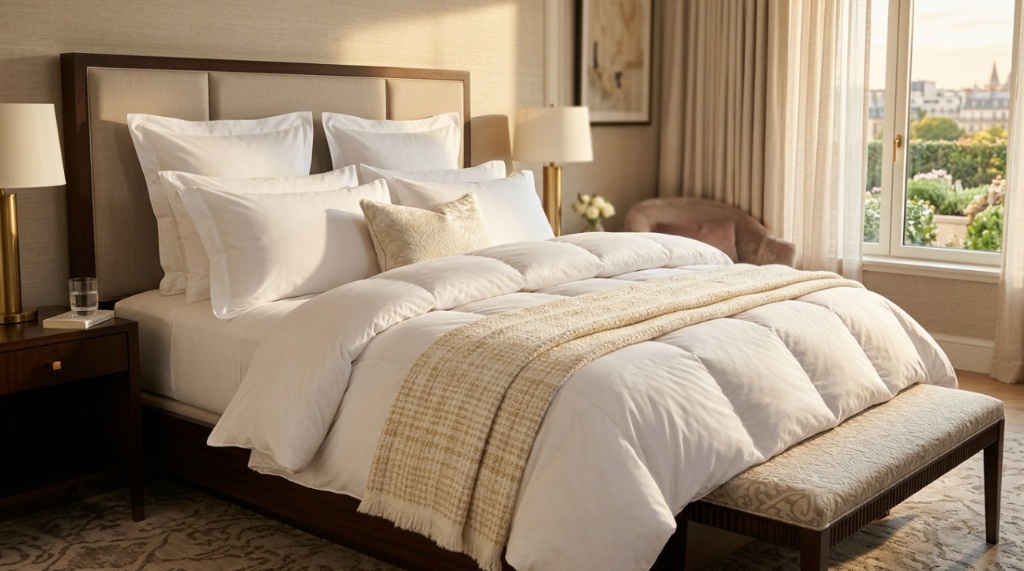
You know that feeling. You sink into a plush hotel bed, and the pillow cradles your head perfectly. You sleep like a baby all night, and you wake up with zero neck pain. Then you check the price tag online and gasp—those pillows often cost $150 each. But here’s the truth: you don’t need to spend a fortune to get that five-star sleep experience. Picking luxury hotel style pillows less expensive than the originals comes down to understanding what makes them special in the first place. That’s exactly what we’ll cover in this guide—so you can wake up feeling like you’re at the Ritz without paying Ritz prices.
What Exactly Makes a Pillow “Hotel Quality”?
Hotel quality pillows aren’t magical. They rely on three main factors: high-quality fill materials, proper construction, and thoughtful cushion depth. When you know these elements, you can match—or even beat—hotel comfort for a fraction of the price.
Most luxury hotels (think Four Seasons, Marriott, and Westin) use pillows made from white down or down alternatives with a high fill power. They also invest in pillow designs that offer both softness and support. The secret is that you don’t need a premium brand name to get premium feel.
Fill Materials That Matter
Goose down, duck down, and high-quality polyester down alternatives each have their strengths. Real down offers unmatched softness and breathability, but quality varies. Look for a fill power between 600 and 700 for that hotel feel without the $200 price tag. Down alternatives have come a long way—they mimic the feel of real down remarkably well at half the cost.
Construction and Stitching
Hotels choose pillows with baffle box construction. It keeps the fill evenly distributed so you don’t wake up with a clump under your neck. Look for double-stitched seams and high thread count cotton covers (at least 300 thread count, ideally 400–600). These details matter more than the logo on the pillow.
How Puffy Should It Really Be?
Hotel pillows aren’t all fluffy clouds. They’re typically “lofted” but not overly tall. Standard hotel pillows sit around 5-7 inches high when uncompressed. They feel luxurious because they fill the space between your head and shoulders without forcing your neck up at an unnatural angle. This balance is the real luxury secret.
Why Are Hotel Pillows So Expensive? Cracking the Price Code
Brand name hotel pillows carry a huge markup for branding and marketing. The actual raw materials often cost less than $30 per pillow. When you understand the price breakdown, you realize you’re paying for the hotel experience, not just the pillow—and that opens the door to smarter shopping.
The Real Cost Breakdown
Materials, labor, packaging, and marketing. For a $120 hotel pillow, the materials might cost $25, labor adds $10, and the remaining $85 covers hotel royalties, branding, shipping, retail margins, and advertising. By skipping the hotel logo and buying directly from quality manufacturers, you bypass those costs entirely.
Which Hotel Brands Mark Up the Most?
Popular hotel brands like the Westin Heavenly Bed are iconic for marketing their pillows at premium prices. At the same time, you can find nearly identical pillows sold by wholesale manufacturers who supply those same hotels. If you know where to look, you can get the exact same feel for 40–60% less.
When Is Buying Hotel Brand Worth It?
There are rare sales, seasonal discounts, and outlet events where hotel-brand pillows drop to 30% off. If you have specific brand loyalty and you’re patient, it can occasionally make sense. But for most people, the smarter move is buying an equivalent-quality pillow without the hotel badge on it, Waking up refreshed starts with the right bedding essentials, but if you find yourself tossing and turning even after upgrading your setup, you might want to explore these Sleepless in Society Natural Remedies for Better Sleep
How to Identify High-Quality Cheap Pillows?
You don’t need to be a textile expert to spot a great pillow at a lower price. Learning to check labels, read spec sheets, and evaluate materials will help you shop smart. Once you know the red flags and green flags, you’ll make confident choices every time.
Read the Fill Power Numbers
For down pillows, fill power tells you how much loft and support you get per ounce. A pillow with 550 fill power is good. 600–650 is excellent. Anything above 700 is luxury grade. But you can find 600–650 fill power pillows for $40–$60 instead of the $150 hotel versions. For down alternatives, look for fiber denier measurements—smaller denier means softer and more durable.
Check Thread Count and Fabric Feel
Pillow covers with a higher thread count (300+) feel smoother and keep feathers from poking through. The fabric should feel crisp and breathable, not stiff or plastic-y. You can see it in the weave quality and feel the difference immediately when you rub the pillowcase back and forth.
Test Compression and Recovery
Press your hand into the center of the pillow. It should compress slightly but spring back quickly. If it stays compressed or doesn’t spring back, the fill is low quality. Also look for a “gusset” (the side panel that gives pillows their trademark boxy shape). A 2–3 inch gusset adds support and keeps the pillow from pancaking flat.
Which Pillow Fill Type Best Matches Your Sleep Style?
Your preferred sleeping position is the single most important factor in choosing a pillow. There’s no such thing as a “best pillow for everyone”—there’s only the best pillow for your body. Knowing your sleep style is the key to matching your needs to the right type of luxury pillow at a discount price.
Best Pillows for Stomach Sleepers
Stomach sleepers need a very thin, soft pillow—almost flat. A down pillow with low loft (around 3–4 inches) works perfectly. It keeps your neck aligned without overextending your spine. Choose a plush down alternative that you can easily squash into a comfortable shape under your head and chest.
Best Pillows for Back Sleepers
Back sleepers need medium support and medium loft—around 5 inches. Medium-firm down or a combination down/feather blend works well here. The pillow cradles the curve of your neck, but doesn’t push your head too far forward. This is where a good 600 fill power down pillow or a high-quality alternative shines.
Best Pillows for Side Sleepers
Side sleepers need the firmest, tallest pillows—around 7 inches of loft. Look for strongly constructed pillows with a gusset to keep the height stable. Firm down alternatives or feather/down blends perform well. The goal is to fill the gap between your ear and shoulder to keep your spine in a straight line from your neck to your pelvis.
Can You Buy True Hotel Pillows Wholesale?
Yes, you absolutely can. Hotel pillow manufacturers sell to the public, often through wholesale or bulk buying options, without requiring a special business license. It’s one of the best-kept secrets for buying luxury hotel style pillows less than retail prices. You just need to understand a few procedures.
Where Do Hotels Actually Source Their Pillows?
Hotels work directly with textile manufacturers or wholesalers. Brands like Pacific Coast Feather, Downlite, and United Pillow are well-known suppliers to the hospitality industry. These brands sell directly to consumers online. You can often buy the exact commercial-grade models used in guestrooms at retail-for-one pricing.
luxury hotel style pillows less If you’re in the market for reliable budget-friendly picks in specific regions, you’ll find helpful local recommendations that align with the same sourcing logic we’re covering here.
How to Buy in Bulk and Save Big
When you order two or four pillows at once, many manufacturers drop their per-pillow price significantly. You might pay $45 per pillow instead of $70 when you buy a pair. It doesn’t need to be a huge bulk order. Just a two-pack usually qualifies for “bulk pricing” in the online wholesale sections of many brands.
What to Watch Out For When Buying Wholesale
Always read the return and hygiene policy. Some wholesale outlets have restocking fees because their return process isn’t as user-friendly as a big-box retailer. Verify that the “wholesale price” includes a warranty. You’ll get lower prices, but the customer service may be leaner, so a little extra caution upfront pays off.
How to Shop Sales to Save Even More Money?
The pillow market is highly seasonal, and smart shoppers time their purchases to land huge discounts. Retailers discount pillows heavily after the winter nesting season and during big mid-year sales. If you can wait a few weeks to buy, you might save 30–50% on the same pillow you were eyeing at full price.
Time Your Purchase Around Major Sales Seasons
Black Friday, Cyber Monday, and Amazon Prime Day are the top times to buy pillows. You also have lesser-known sales like “White Sales” in January. During these events, premium pillow manufacturers routinely offer their high-end models for prices that normally sit in the mid-range tier.
Stack Coupons and Promotions for Maximum Discounts
Combine site-wide coupons with single-product promotions or bundle offers. Always check for sign-up discounts (usually 10-15%) for new newsletter subscribers. Stack those with a sale price and you’re often getting over 50% off the original non-sale list price. This is one of the easiest ways to grab luxury at budget prices.
Why Clearance Sections Are Gold Mines?
Discontinued colors or updated packaging often mean top-quality pillows are heavily discounted. Since pillow cover fabric has different colors, going with a discontinued shade can get you the exact same comfort for up to 70% off. You’re not sacrificing quality—just the ability to choose the color of a pillowcase you’ll cover anyway.
What is the Best Way to Compare Pillow Prices?

Smart comparison isn’t just looking at the price tag. It’s calculating the “cost per sleep” over the pillow’s expected lifespan. A $100 pillow that lasts three years is actually cheaper than a $50 pillow that loses its shape after eight months. Let’s break down how to compare accurately.
Calculate Price Per Sleep Hour
Assume you use a pillow eight hours a night, every night—that’s 2,920 hours per year. A $120 luxury pillow with a three-year lifespan costs $40 per year, which is about 1-cent per sleep hour. A cheap $30 pillow that fails in six months costs $60 per year—double the expense. Always think long-term.
Compare Fill Weights and Densities
When you look at two competing pillows, you need to compare fill weight measured in ounces. A larger king-sized pillow with 42 ounces of fill is a totally different product than one weighing 28 ounces. The higher weight usually means better support and longevity, which justifies a higher price if your sleep improves.
Check the Warranty and Return Policy
A pillow’s warranty tells you how confident the maker is in their product. A 5-year warranty outshines a 1-year warranty even if the pillow is $20 more expensive upfront. It’s a form of insurance. Paying for reassurance and a no-hassle return window is particularly worth it if you’re buying a type of pillow you’ve never used before.
How to Test Pillows Without Buying Them First?
Before you commit to your budget-friendly pick, you can run a few at-home tests in the store that reveal exactly how a pillow will feel at night. These simple tests replicate what the top sleep experts—and hotel engineers—look for in a high-end pillow. It’s like having an in-store evaluation checklist.
The “Hug Test” for Softness
Wrap your arms around the center of the pillow like you’re hugging it. Squeeze gently. It should compress softly without ever feeling lumpy or resistant in one specific spot. The pillow should feel uniformly plush across its entire surface. Lumpy zones suggest inconsistent fill material that will create pressure points when you sleep.
The “Neck Curl” Test for Support
Place the pillow under your neck while you’re standing (simulating a reclined posture). The pillow should push into the curve of your neck with firm, even pressure. It shouldn’t feel like a pole pushing straight out or an overly soft cloud doing nothing at all. This balance is exactly what hotel testers look for during guest trials.
The “Fluff It Up” Test for Recovery
Push both your fists into the pillow’s center and hold for five seconds. Release. Watch how quickly the surface bounces back. A top-tier pillow recovers within 5 seconds. If it takes 10 seconds or more, or leaves permanent fist indentations, the insulation is wearing out. Pass on it—even if the price tempts you.
Is Price Always Equal to Quality in Pillows?
No, price and quality are connected but not identical. You can spend $200 on a pillow that’s overhyped and underwhelming. Conversely, there are hidden gems in direct-to-consumer brands that outperform pillows twice their price. The trick is to focus on verifiable specs rather than marketing flair.
Where Price Markups Are Justified
Very high fill power down (above 800) genuinely costs more because the raw material is rare. Handmade or organic certified pillows also warrant price premiums because of the labor involved. But these are a small fraction of the pillow market. Most of the time, you’re paying for the name.
Where You Can Safely Cut Costs
You can absolutely cut your budget on outer fabric (choose a standard 300 thread count cotton instead of Japanese silk) and on branding. You can also skip pillows marketed for “orthopedic relief” without medical backing. Just buy the right type of quality fill at the right loft for your sleeping style and you’ve matched the hotel experience.
How to Spot Overpriced Gimmicks
Look out for pillows with bizarre shapes that claim to fix everything—they usually don’t. Be skeptical of “NASA-technology” materials marketed in infomercials. If the listed specs don’t mention fill weight, fill power, or thread count, be wary. That’s vague marketing-speak designed to hide what’s really inside.
How to Maintain Budget Hotel Pillows Co They Last Longer?
Once you’ve found the perfect pillow, a little maintenance goes a long way. With proper care, even a budget-friendly pillow can deliver the same lifespan as a premium brand. You just need to protect it and fluff it correctly. These simple routines will keep your pillow feeling new for years.
Washing and Fluffing Best Practices
Check the label, but most down and down-alternative pillows are washable in cold water on a gentle cycle. Use a small amount of mild detergent and run an extra rinse cycle. Then dry on low heat with dryer balls to fluff the fill. Do this every 3-6 months to prevent dust mites and body oil build-up.
When to Replace Your Pillow
Fold your pillow in half and press down. If it doesn’t spring open on its own when you release the pressure, it’s time to replace it. Most pillows last between 18 to 36 months. Even luxury models have a lifespan—and knowing when to let go ensures your neck gets the right support consistently.
The Easy Trick to Double Its Lifespan
Always use a pillow protector underneath your pillowcase. It’s a thin, waterproof, breathable shield that blocks dust mites, sweat, and skin oils. This single $10 investment prevents the fill from being degraded by moisture and allergens, potentially keeping the pillow functional for an extra year or more. It’s the ultimate pro tip.
Frequently Asked Questions
Is it better to buy a down or down alternative pillow for a budget?
Down alternative is usually more budget-friendly and hypoallergenic. However, if you find real down at a discount (during sales or wholesale), it often feels more luxurious for the same price point. The “better” option depends on your allergies and your preference for fluffiness versus support.
Can I negotiate prices on hotel pillows?
Yes, you can often negotiate on bulk or wholesale orders through brand websites directly via chat or email. If you’re buying 4-6 pillows, you can politely ask for a discount on white-label or unbranded models. You’d be surprised how often sales representatives have wiggle room.
What’s the ideal thread count for a hotel-style pillow case?
For luxury style feel, choose a pillow casing with a 300–600 thread count on the outer fabric. This will feel smooth and breathable versus a rough, low-quality fabric. A high thread count (above 800) is nice but often unnecessary and drives up the price without adding function.
Are feather pillows the same as down pillows at hotels?
No. Feather pillows use larger, flatter feathers with stiff quills, offering modest support and often needing regular fluffing. Down pillows use soft clusters from the underbelly of geese or ducks, offering lofty softness. Many hotels use a combos—a firm feather base wrapped in soft down—for ideal comfort.
How many pillows should I buy at once to save money?
Buying a set of two is the most common way to save 10-20% off per-pillow pricing. A set of four can push discounts even higher (up to 30% off). If you have side sleepers in the household, you’ll typically use two pillows per person, so purchasing in pairs is usually safe.
Do hotel pillows go on sale at specific times of year?
Yes, the biggest sales happen during Black Friday, Cyber Monday, and in early January. Hotels themselves also refresh their inventory in the spring. Keep an eye out for independent sellers that stock commercially used or overstocked hotel pillows—these are sometimes sold at a deep discount.
Why does a hotel pillow feel better even if I buy a cheap one?
Often it’s not that the pillow is better—it’s that you’re relaxed on vacation, and you’re likely sleeping in a comfortable bed with crisp, fresh linens. Before you spend money on a fancy pillow, make sure your mattress and your bedding are up to par. The pillow is just one part of the sleep equation.
Final Thoughts on Getting Luxury Comfort for Less
Finding luxury hotel style pillows less expensive than the brand-name originals isn’t about cutting corners—it’s about knowing where the markups are and avoiding them. We’ve covered the fact that materials, construction, and loft are the keys to that hotel feel. We’ve also walked you through smart shopping tactics: checking specs, catching sales, and buying unbranded quality. Your bedroom deserves that five-star comfort every night, and now you have the exact blueprint to make it happen without breaking your budget. So go ahead—use the specs, run the tests, and compare prices. Find the pillow that matches your sleep style perfectly. Then, for your daily refresh routine, establish a regular fluffing habit so every night feels like your first night at a luxury resort. Your neck will thank you, and your wallet will too.