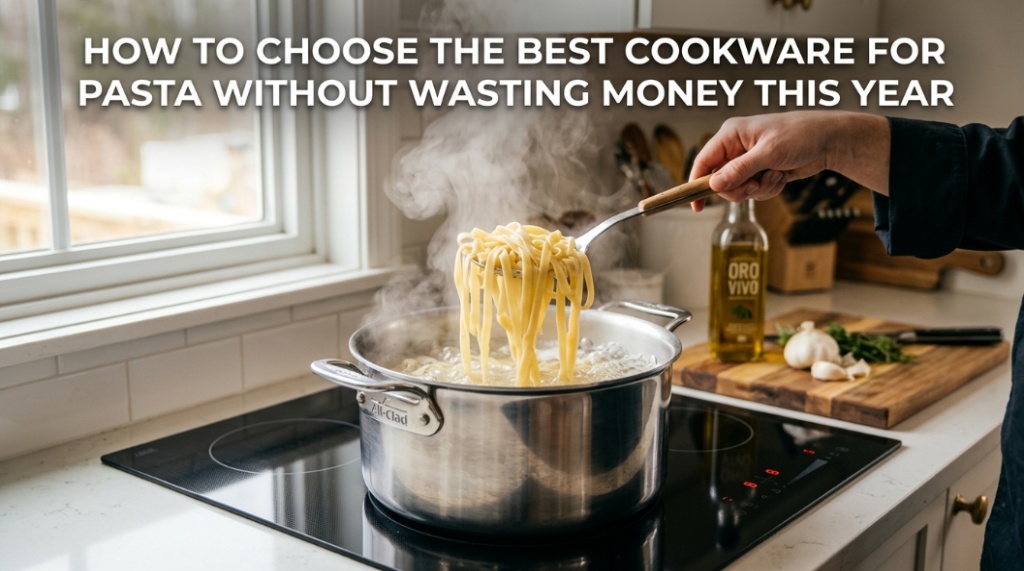
Most people blame their pasta when dinner turns sticky, mushy, or unevenly cooked. The truth is that the problem often starts with the cookware. Choosing the right pasta pot can improve water circulation, prevent overflow, and help you achieve restaurant-quality results without spending a fortune. If you’re searching for the best cookware for pasta, the smartest approach is to focus on pot size, material quality, heat distribution, and long-term durability rather than expensive marketing claims. This cookware guide explains exactly how to choose the right pot for cooking pasta while keeping your budget intact.
What Is the Best Cookware for Cooking Pasta?
The best cookware for pasta is a large pot made from durable materials that provide even heating and enough room for pasta to move freely during cooking.
Many home cooks assume any stockpot will work. While technically true, using the wrong cookware often causes pasta to clump together, cook unevenly, or overflow during boiling. A quality pasta pot improves water circulation and temperature stability, making the cooking process easier and more consistent.
The ideal pasta cookware should include:
- A capacity of at least 6–8 quarts for family meals
- Even heat distribution
- Comfortable heat-resistant handles
- A secure lid
- Durable construction for long-term use
- Compatibility with your stovetop type
For readers looking for a detailed breakdown of cookware options and features, this comprehensive guide to choosing pasta cookware provides additional insights into selecting cookware for different cooking styles.
Why Does the Size of a Pasta Pot Matter?
A larger pot allows pasta to move freely in boiling water, reducing sticking and ensuring even cooking.
One of the most common mistakes people make when cooking pasta is using a pot that is too small. Pasta expands significantly during cooking. When overcrowded, noodles release starch into a limited amount of water, causing them to stick together.
Most culinary professionals recommend using approximately 4 to 6 quarts of water per pound of dried pasta. To accommodate that volume comfortably, a pot between 6 and 8 quarts works well for most households.
Recommended Pot Sizes
| Household Size | Recommended Pot Capacity |
|---|---|
| 1–2 People | 4–6 Quarts |
| 3–5 People | 6–8 Quarts |
| Large Families | 8–12 Quarts |
Larger pots also reduce boil-over incidents because the extra space allows bubbles to rise without spilling over the rim.
Which Cookware Material Is Best for Pasta Pots?

Stainless steel is generally the best material because it combines durability, safety, and excellent performance.
Cookware materials directly affect heating efficiency, maintenance requirements, and longevity. Understanding the strengths and weaknesses of each material helps prevent unnecessary spending.
Stainless Steel
- Resistant to rust and corrosion
- Easy to clean
- Long lifespan
- Non-reactive with acidic pasta sauces
- Excellent for daily use
Most professional kitchens rely heavily on stainless steel cookware because of its reliability and durability.
Hard-Anodized Aluminum
- Excellent heat conductivity
- Lightweight construction
- Fast heating performance
- Often includes nonstick properties
This material is a good choice for cooks who prioritize faster boiling times.
Enamel-Coated Cast Iron
- Superior heat retention
- Beautiful appearance
- Extremely durable
However, these pots are heavy and usually cost significantly more than stainless steel alternatives.
What Material Should You Avoid?
Very thin aluminum cookware often develops hot spots that can cause uneven heating and shorter product lifespan. While inexpensive initially, replacement costs can exceed the savings.
Should You Buy a Dedicated Pasta Pot or a Stockpot?
A dedicated pasta pot can be convenient, but a quality stockpot usually offers better value for most households.
Dedicated pasta pots often include inserts that make draining easier. These inserts allow users to lift cooked pasta directly from boiling water without using a separate colander.
For example, some home cooks prefer cookware systems like the Oster Sangerfield pasta pot set because of their integrated straining features and convenience during meal preparation.
However, dedicated pasta pots typically cost more than standard stockpots. If you regularly prepare soups, stews, stocks, seafood boils, and pasta dishes, a versatile stockpot may provide better overall value.
Choose a Dedicated Pasta Pot If:
- You cook pasta several times per week
- You want built-in draining convenience
- You value specialized cookware
Choose a Stockpot If:
- You want maximum versatility
- You have limited storage space
- You prefer minimizing cookware purchases
How Important Is Heat Distribution When Cooking Pasta?
Even heat distribution is essential because it maintains a consistent rolling boil and prevents temperature fluctuations.
When water temperature drops significantly after adding pasta, cooking times become inconsistent. Premium cookware often incorporates aluminum or copper cores inside stainless steel construction to improve thermal conductivity.
Research from cookware manufacturers consistently shows that multi-layer cookware heats more evenly than single-layer alternatives. Even heating means:
- Faster recovery to boiling temperature
- More predictable cooking times
- Reduced energy consumption
- Improved cooking consistency
A heavy-bottomed pot is often worth the slightly higher investment because it delivers better performance over many years.
Do Expensive Pasta Pots Actually Perform Better?
Not always. Mid-range cookware often delivers nearly identical cooking performance at a fraction of the price.
Many premium brands invest heavily in branding, packaging, and marketing. While some high-end cookware offers exceptional craftsmanship, the difference in actual pasta cooking results is often smaller than consumers expect.
Instead of focusing on luxury branding, evaluate:
- Material quality
- Wall thickness
- Base construction
- Warranty coverage
- Customer reviews
- Stovetop compatibility
A well-built stainless steel pot priced in the mid-range category can easily last a decade or more with proper care.
What Features Help Prevent Overpaying for Cookware?
The most valuable cookware features improve usability and durability rather than appearance.
Before purchasing a pasta pot, check for these practical characteristics:
- Tri-ply or multi-layer construction
- Oven-safe design
- Dishwasher-safe compatibility
- Measurement markings inside the pot
- Tight-fitting lid
- Riveted handles
- Induction compatibility if needed
Avoid paying extra for decorative finishes, celebrity endorsements, or accessories you are unlikely to use regularly.

Can the Right Cookware Improve Pasta Quality?
Yes. Proper cookware improves texture, consistency, and overall cooking efficiency.
Pasta quality depends heavily on maintaining a stable rolling boil. When cookware distributes heat effectively and provides sufficient cooking space, pasta cooks more uniformly from edge to center.
This becomes especially important when preparing premium pasta varieties, homemade pasta, or specialty products created with extrusion equipment. Many enthusiasts interested in advanced pasta-making techniques also explore equipment such as the Cuisinart pasta extruder system to produce customized pasta shapes at home.
Good cookware also reduces:
- Clumping
- Breakage
- Overcooking
- Water boil-over incidents
- Uneven texture
What Mistakes Should You Avoid When Buying Pasta Cookware?
The biggest mistake is purchasing cookware based solely on price instead of performance and durability.
Common buying mistakes include:
- Choosing pots that are too small
- Ignoring material quality
- Buying thin cookware
- Overpaying for unnecessary features
- Ignoring compatibility with induction cooktops
- Selecting cookware without reviewing warranty terms
Another common issue is failing to consider future cooking needs. A slightly larger, higher-quality pot often provides greater long-term value than a cheaper alternative requiring replacement after a few years.
How Do Different Pasta Types Influence Cookware Selection?
Larger pasta shapes and specialty pasta varieties often benefit from larger cookware capacities.
Long pasta such as spaghetti, linguine, and fettuccine requires enough depth to submerge gradually. Short pasta varieties like penne and rigatoni generally fit comfortably in standard stockpots.
Alternative options such as gluten-free products may also require closer monitoring because they can become overcooked more quickly. If you regularly prepare specialty recipes, learning more about ingredients like brown rice pasta alternatives can help optimize both cookware selection and cooking methods.
What Is the Best Budget-Friendly Cookware Choice for Most Home Cooks?
A stainless steel stockpot with a heavy encapsulated base offers the best balance of performance, durability, and affordability.
For most households, a 6–8 quart stainless steel pot delivers everything needed for excellent pasta preparation without excessive spending. It handles boiling, steaming, soup making, and batch cooking while remaining easy to maintain.
Look for:
- 18/10 stainless steel construction
- Heavy-bottom design
- Comfortable handles
- Reliable manufacturer warranty
- Positive long-term customer feedback
These characteristics provide genuine value rather than short-term marketing appeal.
Conclusion: How Can You Choose the Best Cookware for Pasta Without Wasting Money?
The smartest cookware purchase focuses on performance, durability, and practicality rather than branding. A high-quality stainless steel pasta pot or stockpot with sufficient capacity, even heat distribution, and durable construction can dramatically improve your pasta results while lasting for years. Instead of chasing expensive cookware trends, prioritize materials, pot size, and versatility. The right cookware guide can save money, reduce frustration, and help every batch of pasta turn out consistently delicious. Before making your next purchase, compare features carefully, evaluate long-term value, and invest in cookware designed for real cooking rather than marketing claims.
Frequently Asked Questions
What size pasta pot is best for a family?
A 6–8 quart pasta pot is ideal for most families because it provides enough room for pasta and water without overcrowding.
Is stainless steel better than aluminum for cooking pasta?
Stainless steel is generally preferred because it is more durable, non-reactive, and easier to maintain over many years.
Do I need a pasta pot with an insert?
No. While inserts make draining easier, a standard stockpot and colander can achieve the same results effectively.
Can I cook pasta in a stockpot?
Yes. A quality stockpot is one of the most versatile and effective cookware options for pasta preparation.
How much water should I use when cooking pasta?
Most experts recommend approximately 4–6 quarts of water per pound of dried pasta to promote even cooking.
Are expensive pasta pots worth it?
Not necessarily. Many mid-range cookware options provide excellent performance and durability at a lower price point.